constitutional principles answer key pdf

Article Plan: Constitutional Principles Answer Key PDF
This comprehensive guide details core US constitutional principles‚ offering an answer key for effective study and understanding of foundational legal concepts.
It explores popular sovereignty‚ limited government‚ separation of powers‚ and federalism‚ alongside checks and balances‚ and the rule of law.
Understanding the bedrock principles of the United States Constitution is crucial for informed citizenship and navigating the complexities of American law. This article serves as a detailed exploration‚ focusing on a “Constitutional Principles Answer Key” as a learning tool.
We will dissect core concepts like popular sovereignty‚ separation of powers‚ and federalism‚ examining their historical context and modern applications. The Constitution Annotated from Congress.gov provides valuable insight‚ highlighting ongoing debates about interpretation and fundamental values.
This guide aims to empower students and citizens with a robust understanding of these principles‚ fostering critical thinking about constitutional law;
What is a Constitutional Principles Answer Key?
A Constitutional Principles Answer Key is a resource designed to reinforce learning about the fundamental tenets underpinning the US government. It typically accompanies study materials‚ quizzes‚ or worksheets focused on concepts like separation of powers and checks and balances.
These keys provide correct responses and explanations‚ aiding comprehension of complex ideas. Resources like Quizlet offer question-and-answer formats for self-assessment. Course Hero provides completed examples‚ demonstrating application of principles.
Effectively‚ it’s a tool for verifying understanding and solidifying knowledge of constitutional law.
Importance of Understanding Constitutional Principles
Grasping constitutional principles is vital for informed citizenship‚ enabling participation in a democratic society. Understanding concepts like popular sovereignty and the rule of law empowers individuals to evaluate government actions and advocate for their rights.
The Constitution Annotated highlights ongoing debates about interpreting these principles. An answer key aids in navigating these complexities‚ fostering critical thinking.
Knowledge of these foundations is crucial for addressing 21st-century challenges and preserving the balance of power within the US system.
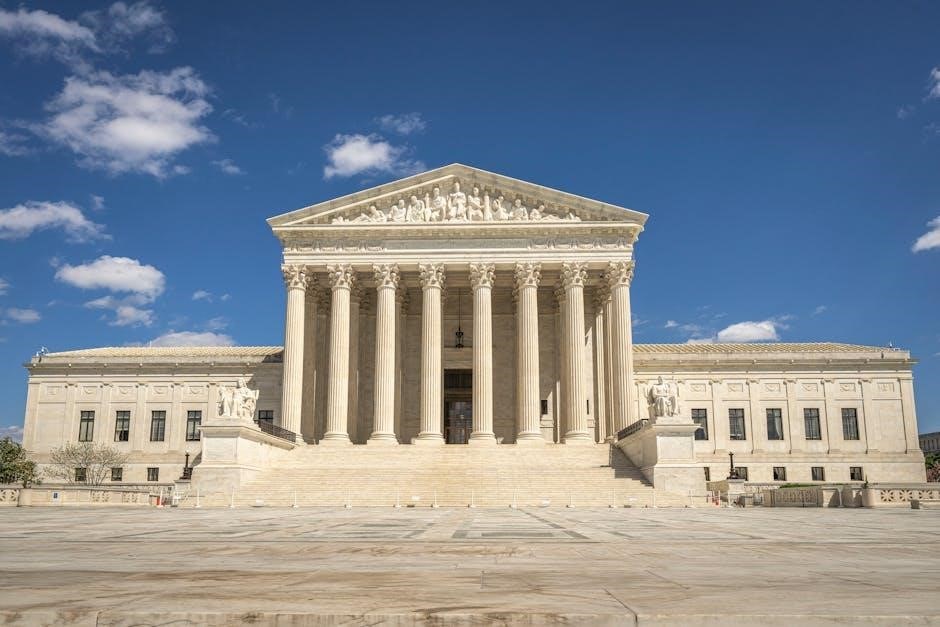
Core Constitutional Principles
Fundamental tenets—popular sovereignty‚ limited government‚ separation of powers‚ checks and balances‚ federalism‚ and rule of law—shape the US constitutional framework.
Popular Sovereignty
Popular sovereignty asserts that the government’s authority comes from the people‚ embodying the concept of “We the People” enshrined in the Constitution. Historically‚ this principle arose from resistance to monarchical rule‚ emphasizing citizen participation.
It’s demonstrated through elections and citizen involvement‚ ensuring the government remains accountable to the electorate; Madison’s arguments underscored this‚ highlighting the people’s ultimate power. Understanding popular sovereignty is crucial for grasping the foundation of American democracy and its enduring principles.
Definition of Popular Sovereignty
Popular sovereignty is the principle that the authority of the government stems from the consent of the governed. This means the ultimate source of political power resides within the people themselves‚ not in a monarch or elite group.

It’s the idea that citizens delegate power to elected officials‚ who are then responsible for representing their interests. This foundational concept ensures governmental legitimacy‚ derived directly from the will of the populace‚ and is central to democratic governance.
Historical Context of Popular Sovereignty
The concept of popular sovereignty emerged from Enlightenment thought‚ challenging the divine right of kings. Colonial resistance to British rule‚ fueled by “no taxation without representation‚” demonstrated a demand for self-governance.
Debates during the Constitutional Convention‚ particularly regarding slavery and states’ rights‚ highlighted tensions surrounding its application. The principle gained prominence in the mid-19th century with the Kansas-Nebraska Act‚ allowing residents to decide on slavery‚ showcasing its contentious and evolving nature.
Limited Government
Limited government signifies that governmental power is not absolute; it’s constrained by a constitution and laws. This principle prevents tyranny by establishing clear boundaries for governmental authority‚ protecting individual liberties.
The US Constitution embodies this through enumerated powers‚ granting Congress specific‚ listed authorities. The Bill of Rights further limits government‚ safeguarding fundamental rights like speech and religion. This ensures citizens retain rights the government cannot infringe upon‚ fostering a balance between order and freedom.
The Concept of Limited Government
Limited government rests on the idea that governmental authority must be restricted to prevent oppression and protect individual freedoms. It’s not about the absence of government‚ but rather a government bound by law‚ ensuring accountability.
This concept stems from historical struggles against unchecked power‚ emphasizing the importance of defined governmental roles. The Constitution establishes this limitation through enumerated powers‚ reserving all other rights to the people or states‚ safeguarding liberty and preventing overreach.
Examples of Limited Government in the US Constitution
The US Constitution showcases limited government through several key provisions. The Bill of Rights explicitly protects individual liberties – speech‚ religion‚ and assembly – from governmental intrusion. Enumerated powers in Article I define Congress’s specific authorities‚ while the Tenth Amendment reserves powers not delegated to the federal government to the states and the people.
Furthermore‚ the principle of judicial review‚ established in Marbury v. Madison‚ allows courts to invalidate laws exceeding constitutional limits‚ reinforcing governmental constraints and upholding individual rights.
Separation of Powers
Separation of powers divides governmental authority among three branches: the legislative‚ executive‚ and judicial. Congress‚ the legislative branch‚ makes laws; the President‚ heading the executive branch‚ enforces them; and the judiciary‚ led by the Supreme Court‚ interprets them.
This division prevents any single branch from accumulating excessive power‚ safeguarding against tyranny. Each branch possesses distinct‚ constitutionally defined functions‚ fostering a balanced and accountable system of governance‚ crucial for protecting citizens’ liberties.
Branches of Government and Their Functions
The Legislative Branch (Congress) enacts laws‚ comprising the Senate and House of Representatives‚ representing states and districts respectively. The Executive Branch (President) enforces laws‚ commanding the military and managing federal agencies.
The Judicial Branch (Supreme Court & lower courts) interprets laws‚ ensuring constitutionality. These branches aren’t isolated; their functions intertwine‚ creating a dynamic system. Understanding each branch’s role is vital for comprehending the US government’s structure and operation.

Checks and Balances as a Component of Separation of Powers
Checks and balances prevent any single branch from becoming too powerful‚ reinforcing the separation of powers. Congress can impeach the President‚ while the President can veto legislation.
The Judiciary can declare laws unconstitutional‚ limiting both legislative and executive actions. This intricate system ensures accountability and prevents tyranny. It’s a cornerstone of the US Constitution‚ fostering a balanced and representative government‚ vital for protecting citizens’ liberties.
Checks and Balances
Checks and balances are a vital part of the US governmental structure‚ designed to prevent power concentration. Each branch—Legislative‚ Executive‚ and Judicial—has ways to limit the others’ actions.
This system ensures no single entity dominates‚ promoting accountability and protecting against abuse of authority. For example‚ the President can veto laws‚ but Congress can override that veto. The courts review laws‚ and the President appoints judges‚ subject to Senate confirmation.
How Checks and Balances Work
Checks and balances function through a series of constitutional grants and restrictions. The President’s power to veto legislation is checked by Congress’s ability to override it with a two-thirds vote in both houses.

Judicial review‚ established in Marbury v. Madison‚ allows the Supreme Court to declare laws unconstitutional. The Senate confirms presidential appointments‚ including judges‚ providing a check on executive power. This intricate interplay prevents any one branch from becoming too powerful.
Examples of Checks and Balances in Action
Presidential vetoes demonstrate a key check; for instance‚ President Truman’s veto of the McCarran Internal Security Act was overridden by Congress. Impeachment proceedings exemplify another – the House impeaches‚ and the Senate tries the official.
The Supreme Court’s ruling in United States v. Nixon (1974) limited executive privilege‚ showcasing judicial oversight. Senate confirmation hearings‚ like those for Supreme Court Justices‚ illustrate legislative checks on the executive and judicial branches.
Federalism
Federalism defines the division of governmental powers between a national government and state governments‚ a cornerstone of the US Constitution. Initially‚ states held more power‚ but this evolved with landmark Supreme Court cases like McCulloch v. Maryland (1819)‚ affirming implied powers.
The Tenth Amendment reserves powers not delegated to the federal government to the states‚ or the people. Modern federalism involves cooperative federalism‚ with shared responsibilities‚ and increasingly‚ debates over federal mandates impacting state autonomy.
Division of Powers Between Federal and State Governments
The Constitution delineates specific powers to the federal government – enumerated powers – like declaring war and regulating interstate commerce (Article I‚ Section 8). Powers not explicitly granted‚ nor denied to the states‚ are reserved to them (Tenth Amendment).
Concurrent powers‚ such as taxation‚ are shared by both levels. The Supremacy Clause (Article VI) establishes federal laws as supreme when conflicting with state laws‚ but states retain significant authority over areas like education and intrastate commerce.
The Evolution of Federalism
Early American history saw a shift from states’ rights emphasis to increased federal authority‚ notably during the Civil War and the New Deal era. McCulloch v. Maryland (1819) affirmed implied powers‚ expanding federal reach.
The late 20th and 21st centuries witnessed “devolution” – attempts to return power to states – alongside ongoing debates over federal mandates and funding. Modern federalism remains a dynamic balance‚ constantly reshaped by judicial interpretation and political forces.
Rule of Law
The rule of law signifies that everyone‚ including government officials‚ is subject to and accountable under the law. This principle ensures fairness‚ predictability‚ and prevents arbitrary governance‚ safeguarding citizens from potential abuses of power.
It protects individual rights by establishing clear legal boundaries and processes. Consistent application of laws‚ impartial courts‚ and transparent procedures are vital components. The rule of law fosters stability and trust in governmental institutions‚ underpinning a just society.
Meaning and Significance of the Rule of Law
The rule of law embodies the principle that legal authority stems from publicly promulgated‚ equally enforced laws‚ not from arbitrary decisions. Its significance lies in providing a stable and predictable legal framework‚ essential for economic prosperity and social order.
It guarantees due process‚ protecting individuals from unfair treatment and ensuring equal justice under the law. This principle limits governmental power‚ fostering accountability and safeguarding fundamental rights‚ ultimately promoting a free and just society for all citizens;
How the Rule of Law Protects Citizens
The rule of law safeguards citizens by establishing clear legal boundaries for government action‚ preventing arbitrary exercises of power and ensuring consistent application of laws. It provides avenues for redress‚ allowing individuals to challenge unlawful governmental decisions through courts and legal processes.
This protection extends to fundamental rights and liberties‚ guaranteeing fair trials‚ protecting property rights‚ and upholding contractual obligations. Ultimately‚ the rule of law empowers citizens‚ fostering trust in the legal system and promoting a stable‚ just society.

Additional Key Principles
Beyond core tenets‚ republicanism and individual rights are vital. These principles emphasize civic participation‚ representative democracy‚ and constitutionally protected freedoms for all citizens.
Republicanism
Republicanism embodies a system of representative democracy‚ where citizens elect individuals to represent their interests and govern on their behalf. This principle isn’t simply about elections; it also stresses civic virtue – a commitment to the common good and public service.
The role of citizens in a republic is paramount‚ demanding informed participation‚ responsible debate‚ and a dedication to upholding constitutional values. Active citizenship ensures government accountability and prevents the concentration of power‚ safeguarding liberty and promoting a just society.
Representative Democracy and Civic Virtue
Representative democracy‚ a cornerstone of republicanism‚ means citizens choose representatives to make decisions. This differs from direct democracy‚ impractical in large nations. Civic virtue‚ however‚ is equally vital – it’s the dedication of citizens to the public good‚ prioritizing community over self-interest.
A functioning republic relies on an informed and engaged citizenry exhibiting integrity and responsibility. Without civic virtue‚ representative systems can succumb to corruption and prioritize private gain‚ undermining the very foundations of a free society.
The Role of Citizens in a Republic
Citizens in a republic aren’t passive subjects; they are active participants in governance. This participation extends beyond voting to include informed debate‚ holding representatives accountable‚ and engaging in community service. A republic’s strength lies in its citizens’ commitment to upholding constitutional principles.
Active citizenship demands critical thinking and a willingness to compromise. Citizens must be vigilant against tyranny‚ both from government and factions within society. Protecting liberty requires constant engagement and a dedication to the common good‚ ensuring the republic’s enduring success.
Individual Rights

The Constitution‚ particularly the Bill of Rights‚ safeguards fundamental individual liberties – freedom of speech‚ religion‚ the press‚ and the right to bear arms‚ among others. These rights aren’t absolute; they are balanced against the needs of society and the rights of others.
Ongoing debates center on the scope of these rights‚ particularly in modern contexts like privacy‚ technology‚ and national security. Interpreting these rights requires careful consideration of historical context‚ evolving societal norms‚ and the principles of limited government and due process.
The Bill of Rights and Individual Liberties
The first ten amendments‚ known as the Bill of Rights‚ explicitly protect core individual liberties from governmental intrusion. These include freedoms of religion‚ speech‚ press‚ assembly‚ and petition‚ alongside rights of the accused – due process‚ a fair trial‚ and protection against unreasonable searches and seizures.
These amendments were crucial in securing ratification of the Constitution‚ addressing Anti-Federalist concerns about potential tyranny. Understanding the Bill of Rights is essential for comprehending the scope and limits of governmental power and individual freedoms.
Ongoing Debates About Individual Rights
Despite the clarity of the Bill of Rights‚ debates surrounding individual rights persist. Contemporary issues like gun control‚ privacy in the digital age‚ and freedom of speech on social media continually challenge interpretations of these fundamental freedoms.
The balance between individual liberty and public safety remains a central tension‚ often requiring judicial review and societal discourse. These ongoing debates demonstrate the dynamic nature of constitutional law and the enduring relevance of protecting individual liberties.

Applying Constitutional Principles

This section examines how constitutional principles are applied through interpretation‚ amendments‚ and modern challenges‚ offering insights into their practical relevance.
Constitutional Interpretation
Understanding constitutional interpretation is crucial for applying principles to modern issues. Different approaches exist‚ ranging from originalism – focusing on the framers’ intent – to a living constitution view‚ adapting to societal changes.
The Supreme Court plays a pivotal role as the final interpreter‚ shaping legal precedent through landmark cases. Debates often center on which approach best upholds the Constitution’s core values and protects citizens’ rights‚ influencing legal outcomes and societal norms.
Different Approaches to Interpreting the Constitution
Several methods guide constitutional interpretation‚ each with unique strengths and weaknesses. Originalism seeks the original public meaning‚ while textualism focuses solely on the Constitution’s text. Living Constitutionalism adapts to evolving societal norms‚ and pragmatic approaches consider real-world consequences.
These diverse perspectives shape legal arguments and judicial decisions. Understanding these approaches is vital for analyzing constitutional law and appreciating the complexities of applying foundational principles to contemporary challenges.
The Role of the Supreme Court
The Supreme Court serves as the ultimate arbiter of the Constitution‚ interpreting its provisions and resolving disputes regarding its application. Its decisions establish precedents binding on lower courts‚ shaping the landscape of American law.
Through judicial review‚ the Court assesses the constitutionality of laws and executive actions‚ ensuring alignment with foundational principles. This power‚ though debated‚ is central to maintaining constitutional order and protecting individual rights.
Constitutional Amendments
Constitutional amendments represent a vital mechanism for adapting the Constitution to evolving societal values and addressing unforeseen challenges. Article V outlines the amendment process‚ requiring proposal by Congress or a national convention‚ and ratification by states.
Significant amendments‚ like the Bill of Rights‚ expanded individual liberties‚ while others‚ such as those abolishing slavery or granting suffrage‚ fundamentally altered the nation’s social and political fabric. They demonstrate the Constitution’s capacity for growth and refinement.
The Amendment Process
The Constitution’s Article V details a two-stage process for amendments: proposal and ratification. Amendments can be proposed by a two-thirds vote in both the House and Senate‚ or by a national convention called by Congress at the states’ request.
Ratification requires approval by three-fourths of the state legislatures‚ or by conventions in three-fourths of the states. This deliberate process ensures broad consensus and safeguards against hasty changes to the foundational law of the land.
Significant Constitutional Amendments and Their Impact
The Bill of Rights (Amendments 1-10) safeguards fundamental individual liberties‚ including freedom of speech‚ religion‚ and the right to bear arms. The 13th Amendment abolished slavery‚ fundamentally altering American society‚ while the 19th granted women the right to vote.
Amendments reflect evolving societal values and address historical injustices. These changes demonstrate the Constitution’s capacity to adapt while upholding core principles‚ shaping the nation’s legal and social landscape.
Constitutional Challenges in the 21st Century
Modern issues like digital privacy‚ cybersecurity‚ and campaign finance present novel constitutional dilemmas. Balancing individual rights with national security concerns remains a central challenge‚ requiring careful interpretation of existing principles.
Debates surrounding gun control‚ immigration‚ and healthcare also test the limits of constitutional authority. The future of constitutional law hinges on adapting foundational principles to address these complex‚ evolving societal needs and technological advancements.
Modern Issues and Constitutional Principles
Contemporary challenges‚ such as data privacy and free speech online‚ force re-evaluation of established principles. The First Amendment’s protections are tested by social media’s influence and misinformation.
Furthermore‚ issues like climate change and voting rights raise questions about federal power and individual liberties; Applying principles like federalism and equal protection to these new contexts demands nuanced constitutional interpretation and ongoing legal debate.
The Future of Constitutional Law
Constitutional law’s evolution will likely center on balancing individual rights with collective security‚ particularly in the digital age. Emerging technologies necessitate re-thinking privacy‚ surveillance‚ and free expression.
The Supreme Court’s role as the ultimate interpreter remains crucial‚ but public understanding and civic engagement are equally vital. Continued debate and adaptation are essential to ensure the Constitution remains relevant and protects fundamental values for future generations.

Resources and Further Study
Explore Congress.gov and the Constitution Annotated for reliable information. Utilize study guides and answer keys to reinforce understanding of these vital principles.
Where to Find Reliable Information on Constitutional Principles
For authoritative resources‚ begin with the Library of Congress’s Constitution Annotated on Congress.gov. This online resource provides detailed analysis and historical context for each constitutional provision. Course Hero offers supplemental study materials‚ including completed principle outlines.
Quizlet provides flashcards for self-testing‚ reinforcing key concepts like separation of powers and federalism. Remember to critically evaluate all sources‚ prioritizing government websites and academic publications. Always cross-reference information to ensure accuracy and a comprehensive understanding of these fundamental legal principles.
Using Answer Keys and Study Guides Effectively
Answer keys‚ like those accompanying a ‘Constitutional Principles’ PDF‚ are best utilized after independent study. First‚ attempt to answer questions and complete exercises without assistance to solidify understanding. Then‚ use the key to identify areas needing further review.
Don’t simply memorize answers; focus on why an answer is correct. Study guides‚ alongside resources like Quizlet flashcards‚ should prompt critical thinking‚ not rote learning. Combine multiple resources – Congress.gov‚ Course Hero‚ and academic texts – for a well-rounded grasp of constitutional law.